

The easy fixes that make a real difference
You don't need a renovation budget to make a parent's home safer. Most of the changes that matter most, taping down a rug edge, moving a lamp closer to a hallway, clearing a path to the bathroom, cost nothing and take minutes.
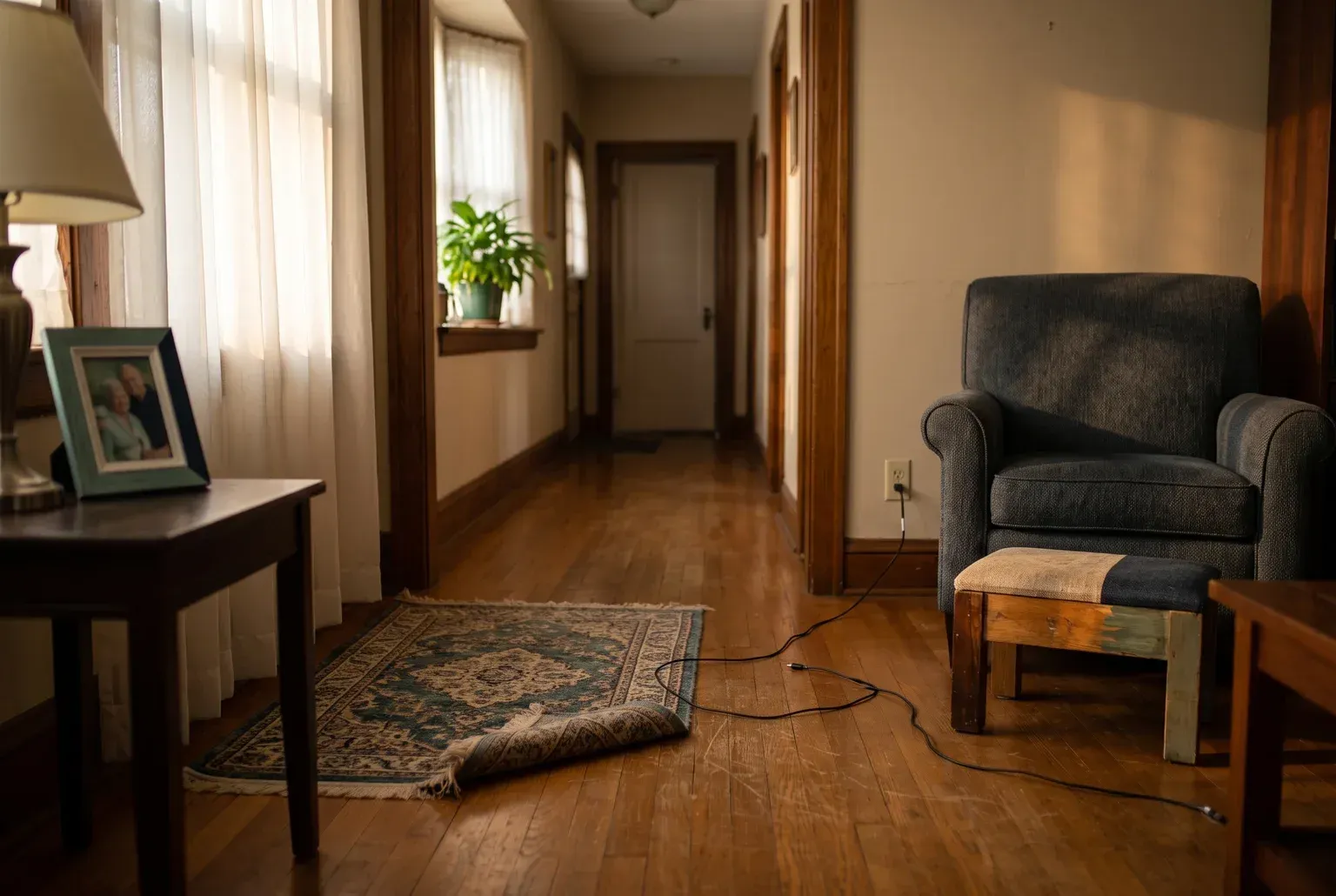
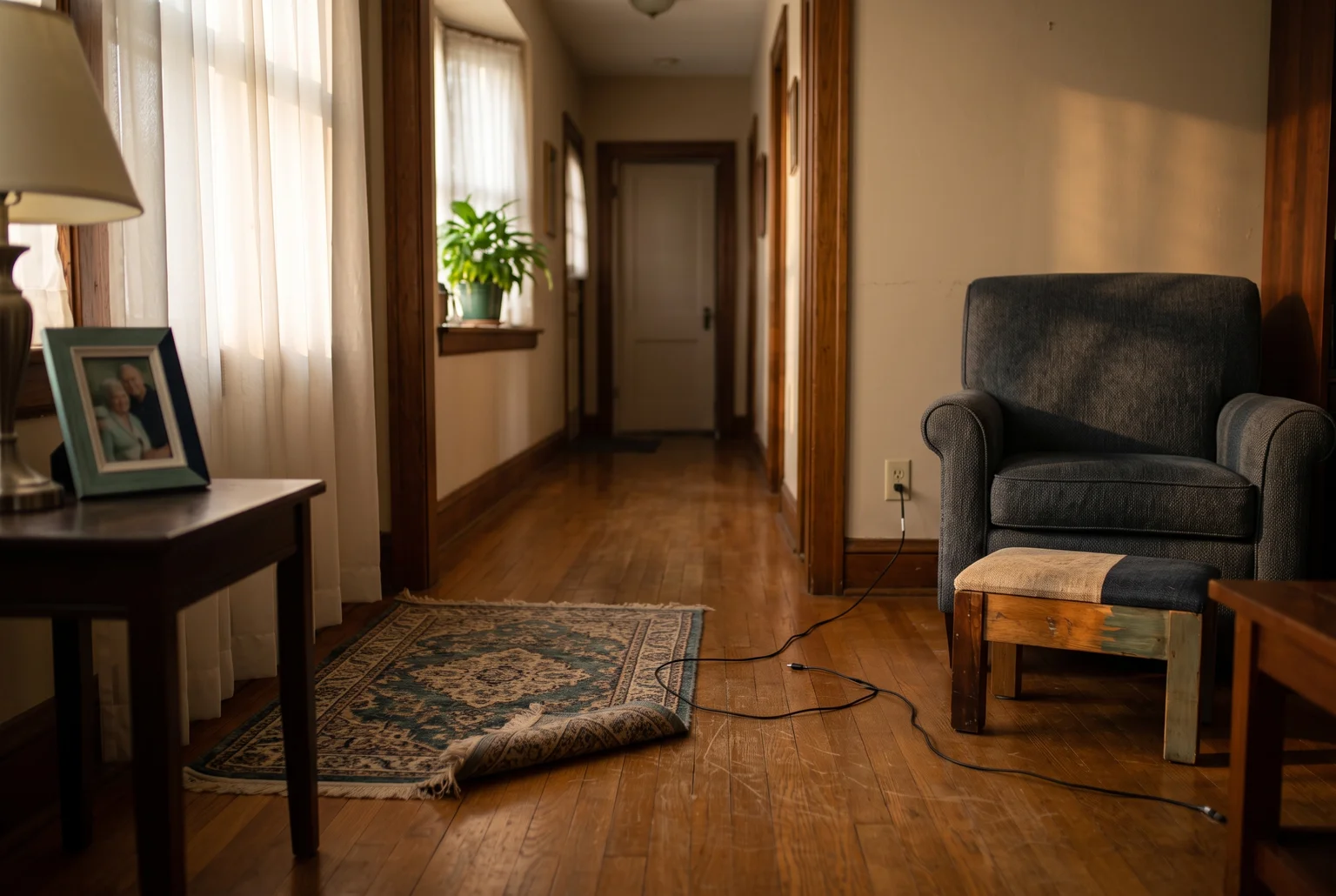
Loose rugs and carpets send tens of thousands of older adults to the emergency room every year, and nearly three-quarters of those falls happen right at home. The CDC points to things like uneven steps, throw rugs, and clutter as modifiable risk factors, meaning they're changeable, not fixed features of aging. That's good news for anyone walking through a parent's house with fresh eyes.
This guide walks room by room through what you can fix today for free, and what's worth a small purchase, usually under $20. Pick one afternoon, bring a notepad, and start looking at the floor.
Clearing the path underfoot
Start with what costs nothing. Walk through every room your parent uses daily and remove any throw rug or small area rug you can live without entirely. It's the fastest fix on this list, and fall-prevention guidance from the National Institute on Aging lists loose rugs as one of the first things to pull up.
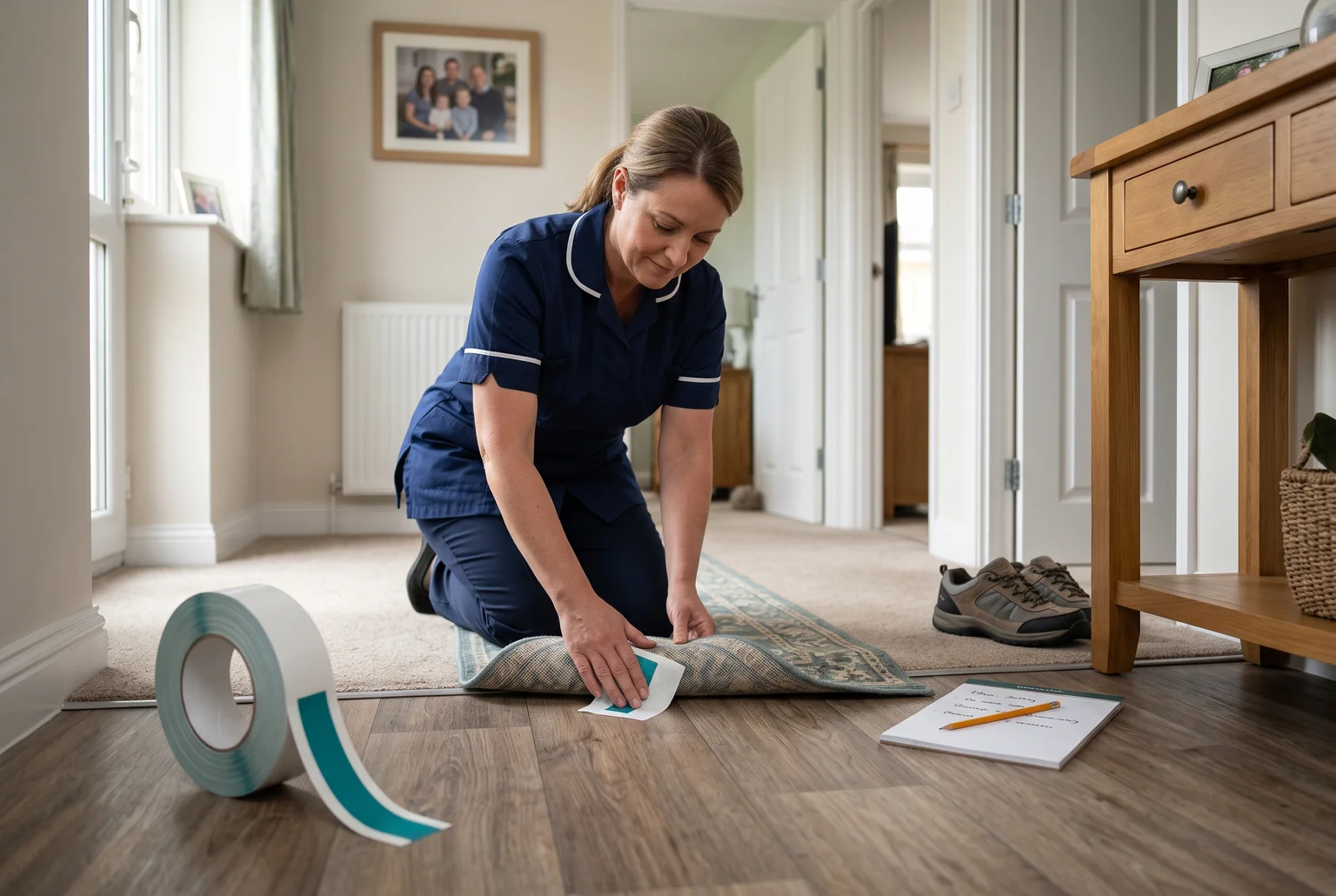
If a rug has sentimental value or serves a real purpose (warmth on cold tile, cushioning near a sink), don't toss it. Secure it instead:
- Add non-slip rug tape or grippers under all four corners. These run about $5 to $15 at Target or as low as $4.34 on Walmart.
- Check wall-to-wall carpet for bunching or curling, especially near doorways, and press or tack down loose edges.
- Look at where flooring changes, tile to carpet, carpet to hardwood. These transitions are common trip points worth a quick inspection.
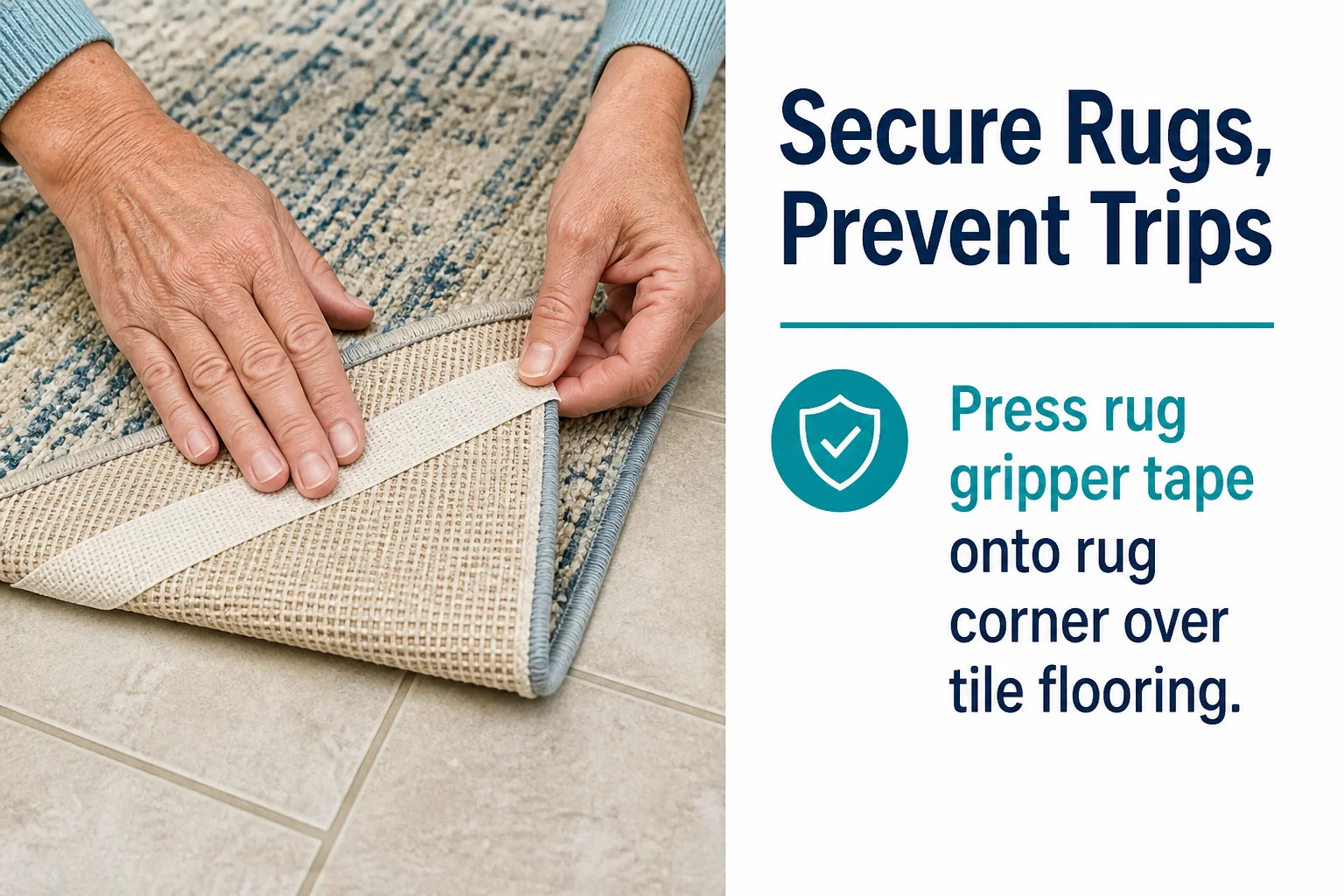
Next, look at open floor space itself. Move furniture that narrows a walking path, even by a few inches. A side table or ottoman that's fine for you may be a squeeze for someone using a cane.
Check for slippery spots on hard floors, entryways where rain tracks in, kitchens near the sink, and consider a slip-resistant strip or mat if needed.
Cords matter here too, but we'll cover those, along with general clutter, in a later section.
Making sure every room is easy to see
Dim rooms hide the exact things this guide is telling you to fix, cords, rug edges, that one step down into the sunroom. Good lighting is one of the cheapest changes on this list, and much of it is free.
Start with habits that cost nothing:
- Turn on the light before walking into a room or down a hallway, not after. This sounds obvious, but it's the habit that gets skipped when someone's half-asleep at 2 a.m.
- Open curtains and blinds during the day. Daylight is free and often brighter than a table lamp.
- Check that a light switch exists at both ends of any long hallway, so your parent never has to walk a dark stretch to reach one. The National Institute on Aging specifically flags this as a common gap in older homes.
- Make sure the stairs are lit at both the top and bottom, ideally with a switch accessible from each end.
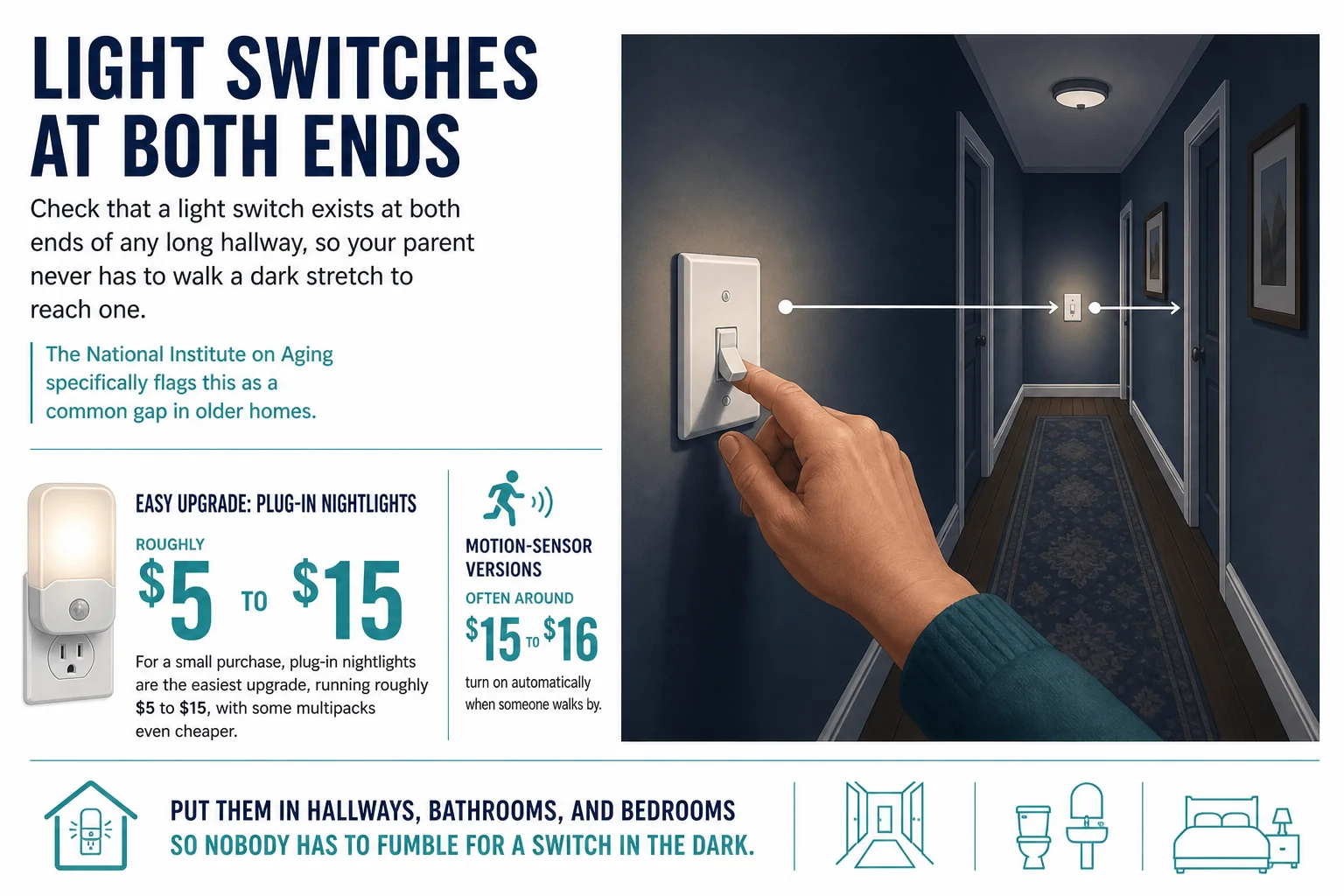
For a small purchase, plug-in nightlights are the easiest upgrade, running roughly $5 to $15, with some multipacks even cheaper. Put them in hallways, bathrooms, and bedrooms so nobody has to fumble for a switch in the dark. Motion-sensor versions, often around $15 to $16, turn on automatically when someone walks by, which is especially useful for stairwells and the path from bed to bathroom.
Making stairs safer, inside and out
Stairs are where a stumble is most likely to turn into a real injury, so a few free checks here go a long way.
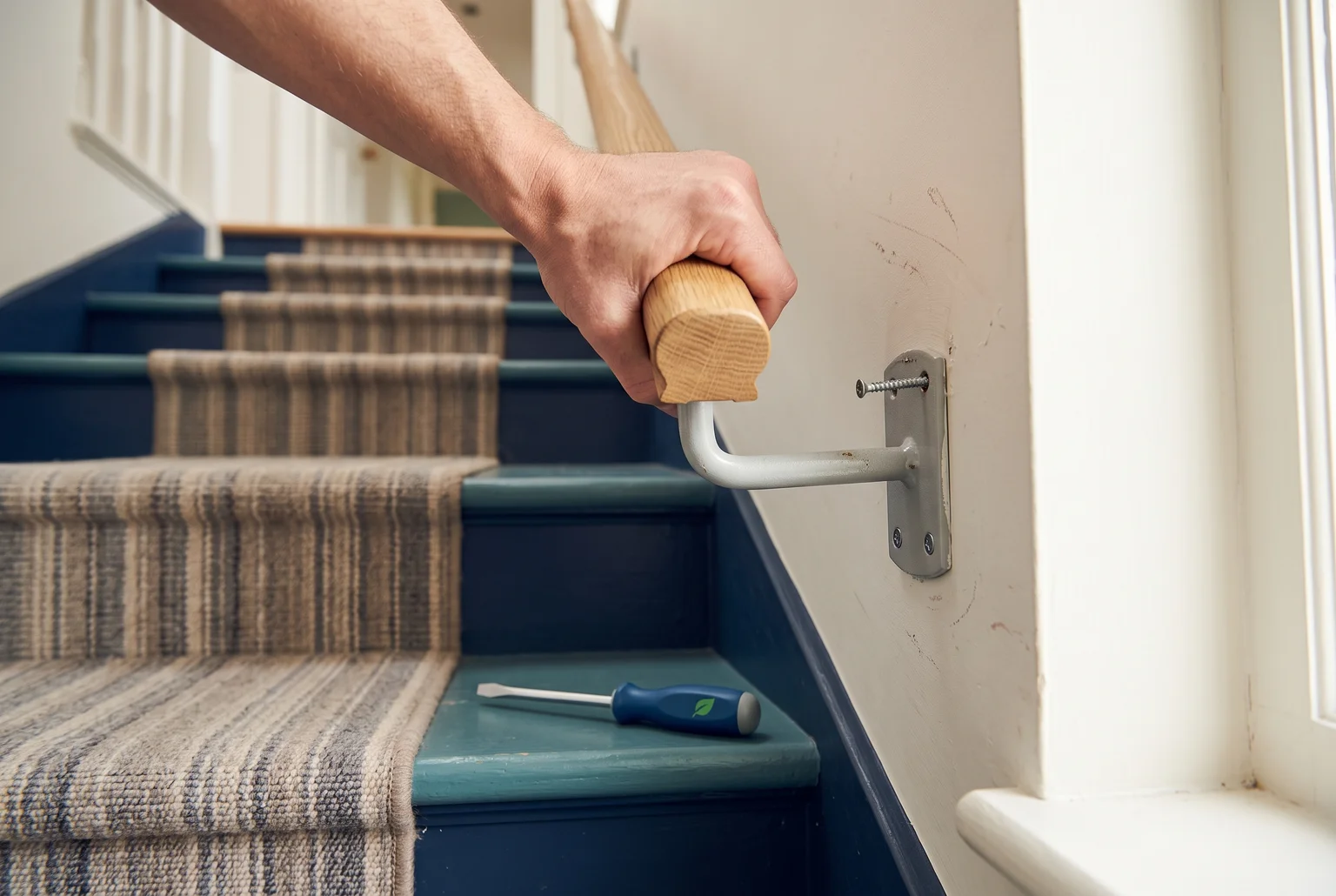
- Grab both handrails and give them a firm shake. If a rail wobbles because a screw has backed out, tightening it with a screwdriver is a five-minute fix. If the bracket has pulled away from the wall, the wood is cracked, or the rail doesn't run the full length of the stairs, that's a repair job worth doing properly rather than patching.
- Clear the stairs completely. Shoes, laundry baskets, stacks of mail, anything left on a step is one of the easiest hazards to remove for free.
- Walk each step and look for uneven edges, loose carpeting, or a tread that's coming unglued. Secure or replace loose carpet, and repair any step that's cracked or sitting at an odd angle.
- Add non-slip strips or adhesive treads to the edges of steps that feel slick, especially bare wood or tile. These typically run under $20 for a full set of stairs.
- Reflective or contrast tape on the top and bottom step edges makes them easier to see in low light, but it's a visibility aid, not a grip aid. If a staircase is genuinely slippery, pair it with a non-slip tread.
- Outside, check that steps are level and free of moss, ice, or debris, and add non-slip material if the surface gets wet often.
Cutting slip risk in the bathroom
The bathroom is where wet floors, small spaces, and getting in and out of the tub combine into the highest-risk spot in the house. A few of these fixes cost nothing at all.
- Put a non-slip mat inside the tub or shower, and a separate one on the floor just outside it. Basic options run $5 to $15 at Target or Walmart, and even a $12.99 sticker-style set for the tub floor beats a bare, wet surface.
- Wipe up puddles right after a shower or bath instead of letting them sit. This costs nothing and takes ten seconds.
- Keep a nightlight or motion-sensor light in the bathroom so it's never pitch dark for a middle-of-the-night trip.
- Move soap, shampoo, and towels within easy reach so there's no need to stretch or lean while standing on a wet floor.
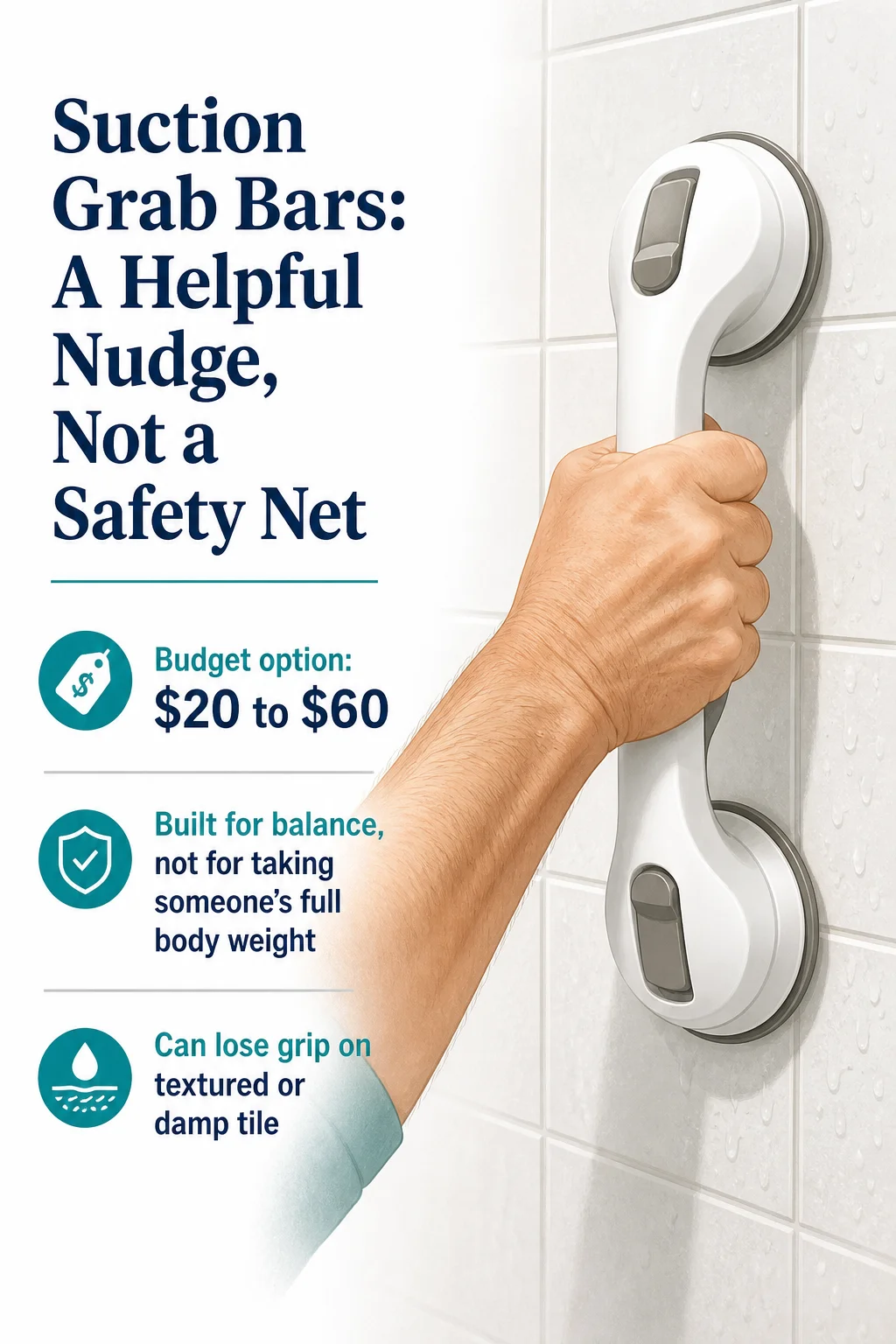
Suction grab bars, the kind that stick to tile without drilling, are a reasonable budget option at $20 to $60, and far cheaper than installing a permanent bar. But they're built for balance, not for taking someone's full body weight, and they can lose grip on textured or damp tile. If someone leans on one hard during a fall, it may not hold. Think of them as a helpful nudge, not a safety net.
Clearing walking paths and taming loose cords
This one costs nothing but time. Set aside 15 minutes to walk through the house together, room by room, looking only at the floor and the paths between rooms.
Move furniture out of main walking routes, especially anything low, like ottomans or side tables, that's easy to clip with a foot. If a favorite chair has sat in the same spot for a decade, that's fine, as long as there's a clear path around it.
Tape or clip extension cords and phone chargers along the wall instead of letting them stretch across a room. Cord clips cost a couple of dollars, or you can tuck cords under furniture edges for free.
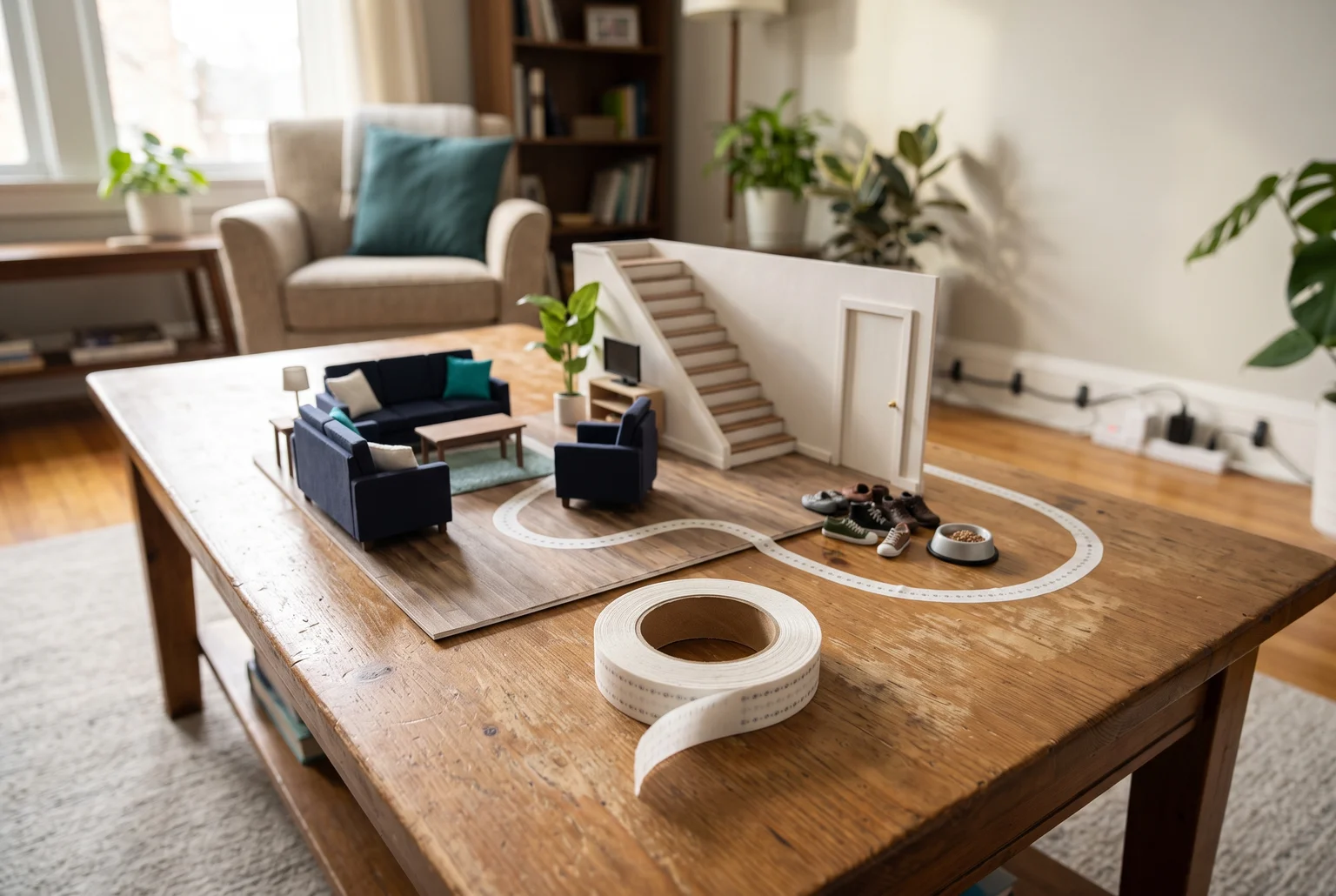
Clear stacks of newspapers, shoes, plant stands, and pet bowls from hallways and doorways. Look at the bottom of stairs too, since that's a common catch-all spot for shoes and bags.
Doing this walkthrough together gives you a natural way to talk about safety without making it feel like a lecture, and most of it takes less time than making dinner.
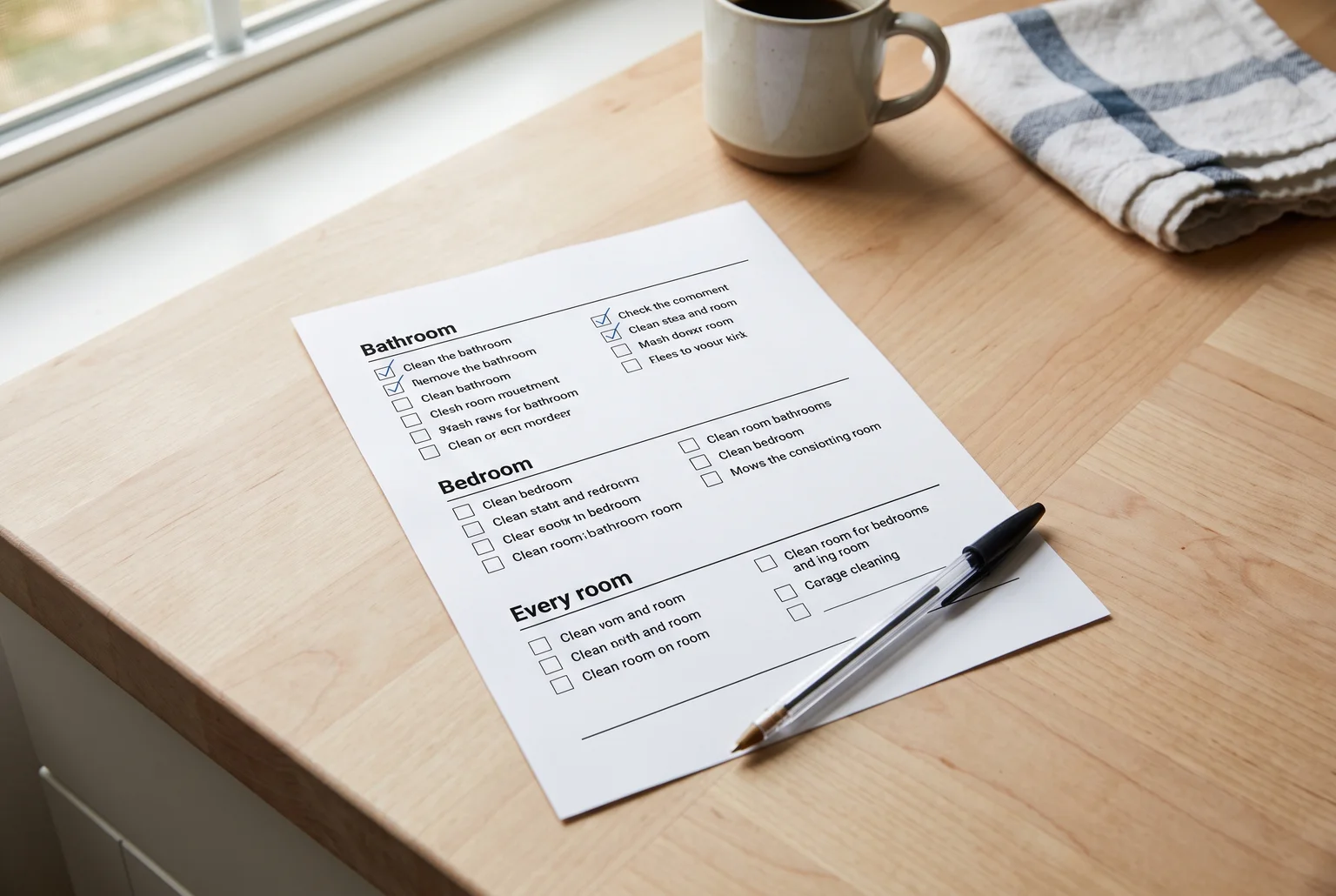
Print this checklist for your walkthrough
Living areas and hallways- Rugs taped down or removed - Clear walking path, no low furniture in the way - Cords secured along walls, not across floors - A light switch at both ends of hallways
Stairs- Handrails on both sides, checked for wobble - Non-slip treads on bare wood or tile steps - Bright light at the top and bottom
Bathroom- Non-slip mat in the tub or shower - Grab bar near the toilet and shower entry - Soap, shampoo, and towels within reach without stretching
Bedroom- Nightlight or lamp within arm's reach of the bed - Clear path to the bathroom door
Every room- Clutter cleared from floors and doorways - Good lighting, especially near switches and entryways
Getting extra help when a fall has already happened
Most of the changes in this guide take an afternoon and a few dollars. But some situations call for more than a checklist. If your parent has fallen more than once in the last six to twelve months, had a recent fracture or sprain, or seems noticeably less steady on their feet, it's worth asking a doctor about a referral to an occupational therapist or a local aging services program for a formal home safety assessment. They can spot risks specific to how your parent actually moves through their space, something a checklist can't fully capture.
That said, needing this kind of help isn't a sign you've missed something. It just means you're paying attention, which is most of the work already.
Sources



Guardian Angels helps strengthen senior care staffing through a new LeadingAge Minnesota partnership